Books -- reading and writing.
Home, cooking, the weather.
And whatever connections I can make between these chapters of my life.
Showing posts with label Historical fiction. Show all posts

Tuesday, January 23, 2018

Super Site!

You know what they say about southerners and their stories? If there are three connections to describe a person, you know that's a southerner telling the story.

Kind of like what I said the other day about my best friend's husband's sister's child. Get it?

That's how I feel sometimes about the GREAT links on my buddy Rosi Hollinbeck's blogposts.
When I go there, I may have to click through several posts- all good- but I find connections.


Like this one, TIME TRAVELER.
Words! A big help for anybody who writes HISTORICAL FICTION.

Here's an example:

Words from 1967

1967 was the first year you could do “aerobics,” ponder “biotech,” go to “B-school” or go on an “ego trip,” take “estrogen replacement therapy,” and live in a “fantasyland.” 


Tuesday, March 1, 2016

Things That Inspire Us

I've spent the past few days submerged in writing and learning new things about books for kids. If you find yourself in the Pacific Northwest about this time next year, do not miss the 14th Annual Children's Literature Conference at Western Washington University. 

Not only did I hear some fabulous writing wisdom, I met some fabulous teachers, writers, librarians- lots of librarians! 
I made new friends and hung out with old. 

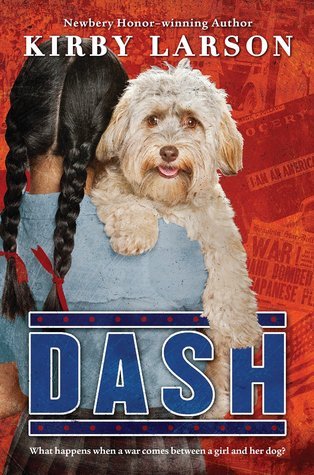
One new friend, Adam Shaffer, just posted the most amazing Nerdy Bookclub post about historical fiction, specifically about Kirby Larson's awesome book, DASH.


I'm putting the entire link here so you won't overlook it. Teachers, be inspired. Writers, take a lesson from a master and read Kirby's book.


https://nerdybookclub.wordpress.com/2016/02/25/a-dash-headlong-into-history-by-adam-shaffer/


Adam has a lot of excellent ideas about historical fiction and using it in the classroom. I could quote the entire post, but I'll begin and end here: 

"There is enormous value in reading these books. We
 are more knowledgeable, more compassionate, more understanding people when we read historical fiction."


Monday, February 1, 2016

Historical Fiction...


Journalism allows its readers to witness history; fiction gives its readers an opportunity to live it.

from JOHN HERSEY 

 (My thought for the day...)


Maybe writing with quill and ink will speed things along?

Monday, September 28, 2015

Oh Those Sixties!

Yes, the 1960s were turbulent, colorful, musical, scary, exciting, and almost any other word you can come up with. 

Also fodder for quite a few novels that examine the time period from varying lenses. And really, the 60s were not only about the civil rights movement, the Cuban missile crisis also took over the news, and we landed a man on the moon. Oh, yeah, the Beatles and Elvis. I could go on and on.

To borrow a quote from a new book written about a slightly earlier time in our history: 
"History is memory researched. 
Historical fiction is memory brought to life."
(Avi, from his Author's Note to Catch You Later, Traitor)

At least two of these authors do write from memory, and readily admit that's what inspired them.

First up? Jackson native Taylor Kitchings', debut middle-grade novel,  
YARD WAR, set in 1964 Mississippi. Published this summer from Wendy Lamb Books/ Random House, the book is filled with memories and research from the 1960s, of boys being boys and often not thinking, of things never said out loud, of people who may have been ignored and overlooked while trying their best during very difficult days.

CLICK HERE for an excellent interview with Mr. Kitchings.


Much as I love the cover image, this book is about so much more than football.


There's a lot of truth in this interview question and this quote from the book.

Trip’s parents’ attitudes change greatly by the end of the book, as they ponder if they should give up on living in Mississippi. Trip’s father explains it like this: “Trip, it’s like one day God took the best of what’s good and the worst of what’s bad, stirred it all up, and dumped it between Memphis and New Orleans. You can’t move away from a place like that. You have to help keep the good in the mix.” Please explain that thought. 

Mississippi is so complex and mysterious, I think you have to grow up here to understand it at all. I don’t claim to understand it, I just know it’s essential to me. “The best of what’s good” goes beyond the food and the music and the sports and everything of which Mississippians are justly proud; it’s the way people care about each other. We know what it is to feel with, and a person doesn’t have to be our best friend in order for us to feel it. Even when it’s formal or fairly surface, it is well-intentioned and the prevalent inclination to be kind here adds a sweetness to life that I do think is rare. For the “worst of what’s bad,” check the latest statistics.

Order this novel from all the usual suspects or you can go right to Lemuria and get a signed copy.  
HERE's the link: http://www.lemuriabooks.com/Yard-War-p/40952.htm 


 But wait, my list runneth over! Or is it runneths?

FULL CICADA MOON, Marilyn Hilton's newest novel (Penguin Random House, September 2015), is a delight. Told in free verse poems, this novel explores both the civil rights history of the 60s and the internment of Japanese-Americans during World War II. 


Beautifully written, strong characterization, a lovely novel in every way. The narrator, Mimi Yoshiko Oliver is smart and wise, a fierce female character in a time when it wasn't easy to be. I especially love the act of civil disobedience involving shop class.

This School Library Journal starred review highly recommends the book. I heartily concur. 


COLD WAR ON MAPLEWOOD STREET (Putnam, 2015) by Gayle Rosengren is obviously- and truthfully as explained in the Author's Note- a story pulled from a strong memory. The Cuban missile crisis is most likely unfamiliar to young readers. This new novel feels very authentic to the days surrounding that event. 

I absolutely adore this cover image. Hats off to the book designers here. 


I also just reviewed THE SEVENTH MOST IMPORTANT THING for the Christian Science Monitor. You can read all about it. Set in the 60s but a very fresh story that could take place any time, and such good writing.


For more middle-grade book reviews, giveaways, and all sorts of goodies, check out the links every Monday on Shannon Messenger's blog: MARVELOUS MIDDLE GRADE MONDAY, right here. 


For my own Pinterest board and possible inclusion in future presentation handouts, I'm compiling a list of middle-grade novels set during the 1960s. What are your favorites?

Wednesday, June 18, 2014

The Meaning of Maggie

Here are some of the things I love about this book.

The cover.


(and not just because it has a library card and date stamper on it. But that's part of it.)

Maggie's attitude toward her sisters. How it changes and is so very true to real sisters.

The wisdom she develops as the story progresses.

And certainly not least of all. The book trailer. Wow.

Click HERE to see what Mr. Schu has to say and to read Megan Jean Sovern's interview. 

Click HERE to read my thoughts on whether something that takes place so recently is truly historical fiction. 

Linda Urban just wrote the greatest blogpost about The Meaning of Maggie. CLICK HERE to go there. 

(My copy was from the library. I was lucky. I understand there's a long reserve list now. If you've read it, do let the rest of us know what you think. If you haven't read it, get thee to a library or a bookstore asap!)


Here's Maggie's amazing trailer. Enjoy!


Sunday, November 24, 2013

BROTHERHOOD by A.B. Westrick

The post-Civil War Reconstruction Period fascinates me.

You'd think I'd know a lot about this sad, turbulent time in our country's history. I studied Mississippi history at least twice before graduating from junior high school, and we usually made it through the ill-fated reconstruction. Then there was American History with Mrs. Brown and a college class in Southern History and one on the Civil War.

Now I don't miss an episode of HELL ON WHEELS.

Even as a seventh grader studying the Reconstruction, I loved the sound of Scalawag and Carpetbagger.
Oh, and I loved that we were allowed to say Damn Yankees in our classroom. Outloud. Even the teacher said it. In context, of course.

My grandmother recalled stories passed down from her own parents. How her grandfather was pardoned by President Johnson for fighting, so that he could vote and own land.
That's how fresh the history was to Southerners of her generation.

But I can't think of a lot of well-written, gripping stories written for Middle Grade, set during this time period.

Now there's a new one, just out, that I couldn't put down.


My latest fascinating read is BROTHERHOOD, a debut novel set in Richmond, Virginia right after the War Between The States.

(Okay, call it what you will. The War of Northern Aggression was a particular favorite in that Mississippi history class.)

But back to BROTHERHOOD, a novel I truly loved.
Westrick does an admirable job of portraying the period and the city. I felt like I was right there with the brothers. The character of Shadrack was so well written--conflicted and tortured by his older brother and by his allegiance to his family.


(ages 10 and up, though it's one adult readers will appreciate)


Be sure to read the Author's Note, especially the information about the Ku Klux Klan.

My ties to Virginia go way back. I recently spent time reading and writing there.
Can you imagine watching this sunset every evening?


Or being surrounded by old books? Lots and lots of old books. I can't keep my hands off.
Wouldn't you be inspired?


And I love the city of Richmond, walking the streets, hearing the sounds, visiting the museums.
Now I'll look at that city with fresh eyes.

BROTHERHOOD recreates it so vividly.
Isn't that what you want a good book to do?

Here's a link to the author's webpage:
http://abwestrick.com

For an excellent interview with A.B. Westrick, click HERE. 

(Thank you to the publisher for an Advanced Reading Copy. )


Thursday, November 7, 2013

Making History, the Fictional Kind

If you've never "done" a Highlights Foundation workshop, put this on your Wish List.
An amazing experience, and I don't just mean the food or the people. Your own cabin in the woods. Surrounded by writers. Your complete manuscript critiqued by professionals.


Check out the book I found on the shelf in the Lodge, where the faculty stays.
There are all sorts of old and odd books here!


Yesterday's sunset!

A walk to the end of the road and we discovered an office with all sorts of artifacts.
Including an original Highlights Magazine.


In anticipation of this week, I did a little Historical Fiction reading.

Thanks to Bobbi Miller, my brain is now thinking about what Avi had to say.
(Yes, I totally get the costume drama thing.)

Avi, an award-winning master of the genre, offers that some historical fiction stays close to the known facts, while others are little more than costume drama. “Ultimately, what is most important is the story, and the characters.” Facts, according to Avi, do not make a story. “Believable people do…Truth may be stranger than fiction, but fiction makes truth less a stranger.”

Check out Bobbi's article, Why is Historical Fiction Important, HERE.

Lots more quotes from authors you'll know and love. And links to other things historical!
Here's one example, re: Teaching with Historical Fiction.

And these writing tips, from Mary Sharratt, via Publisher's Weekly:
"The most innovative historical fiction, to my mind, draws obscure characters from the margins of history and sets them center stage."

And if you're interested, there's this, my previous thoughts on Historical Fiction:
http://ascattergood.blogspot.com/2011/06/what-heck-is-historical-about-it-anyway.html 


Stay tuned.  I hope to post a few quotes from our fabulous writers of Historical Fiction here this week at Highlights. Soon!


Wednesday, October 9, 2013

P.S. Be Eleven

You know that thing about knowing somebody who knows somebody who knows somebody?
That's kind of how I feel about Rita Williams-Garcia. I've never met this writer, nor have I heard her speak, except on the occasional YouTube someone shares. But I know a few people who know her and probably know a lot of people who have heard her talk about how to write. I suspect she's brilliant.

I want some of her Writing Fairy Dust to spill my way.

And while I try very hard not to envy anybody's fabulous talent, Rita Williams-Garcia's books about those Gaither girls are truly enviable.


Three things I love about this new book, P.S. Be Eleven.

1. You get a sense of history without being banged over the head with it. The girls are funny in a way that a lot of kids will truly get. They constantly bicker. They laugh and swoon over the Jackson Five. Standing in Mr. Mack's Candy Store, they remember Power to the People from their One Crazy Summer in Oakland with their poet mother. But Fern chimes in- in a way that younger sisters even today might - with "Free candy," instead of Free Huey.
So funny.

Their Vietnam veteran uncle's serious story is interwoven with the girls' worry about seeing Michael Jackson. Beautifully and seamlessly told, this subplot is an important, yet kid-friendly discussion.

2. Those authentic character voices. Wow.
I love all three sisters. I love Big Ma, their grandmother.
But Delphine is wise way beyond her 12 years.

Here's her take on the 6th Grade Dance:

       For me, the sixth-grade dance meant trying to match steps with boys I'd slugged...For me, and me alone, it meant waiting to be asked to dance when no one would ask because they'd have to look way up at me...
       I surely didn't want to be the girl no one asked to dance. I didn't want to be the girl who swayed by the punch bowl and cookie table, pretending to enjoy watching everyone else dance. I didn't want to be Miss Merriam Webster's definition of a sixth-grade wallflower.

Oh, how I remember those days!

3. The sensory details and descriptions inspire author-envy, I'll admit.
Like the teacher's letter. "The smell of purple ink swirled up my nose when I unfolded the bright white paper."  
Yes, I know. That mimeograph machine smell!

And Big Ma dressed for church, "with a pinned-on hat, a shiny black purse, and black gloves that crawled past her wrists."

I've been thinking a lot about Historical Fiction lately. I love reading books with terrific and true tiny details.
I'm excited about my upcoming whole novel HIGHLIGHTS FOUNDERS WORKSHOP on Historical Fiction.
(There may be a couple of places left. Click that link up there for details.)

I could go on and on.
But I'll let you see for yourself. And feel free to let me know your thoughts.


For my thoughts on the first book about these fabulous characters and my review on Joyce Moyer Hostetter's history blog, CLICK RIGHT HERE, please.

Wednesday, April 24, 2013

Historical Fiction Tour

Anybody planning a trip this summer?

The Atlantic Wire titled this piece "A Literary Tour of Historical Y.A."
(I especially love that they included GLORY BE. But also some of my very favorite books: Hattie Ever After and One Came Home, for example.)

Click right here to see the entire list.⬅

And what an interesting recurring column, Y.A. for Grownups.
It's as if they know exactly what I love to read...
Kind of makes me want to pack up my bags and go.

Sunday, August 28, 2011

What I'm Reading During Hurricane Watch


A few years ago-- okay a long time ago-- I started married life with a Navy Hurricane Hunter in Weather Reconnaissance Squadron 4, based as NAS Jacksonville, Florida. Back then, we were totally tuned in to hurricane season. And this was before the Weather Channel.

 But while living in the northeast, I kind of ignored hurricanes. We worried more about blizzards.

When we moved to Florida, it all came back to me. Especially during 2004, a Big Season for storms. We normally aren't in Florida during hurricane season. We button our little house up, move everything out of harm's way, and head back to New Jersey. But that summer of 2004, we were in St. Petersburg and passed the storm hunkered down with our dog and our family. I seem to recall learning how to play Texas Hold 'em in that storm.
 
Hurricane Irene, through a strange set of crazy circumstances, found me in Florida, and the hurricane barreling toward my New Jersey condo. Go figure.

Thanks to nice neighbors who popped over there yesterday, the plants were secured, the flag removed, the packages left on the doorstep safely put away. My New Jersey basement, maybe not. I'm keeping a weather eye out, as they say.

But today, I'm saturated with this post-hurricane 24/7 coverage. So I decided to  re-read Jennifer Holm's TURTLE IN PARADISE. Remember the hurricane? The Florida Keys, 1935.

Here's a little bit of it, from Turtle's point-of-view:

Raindrops belt the shack like spitballs. The storm is scarier than anything I've ever been in before because the shack is so flimsy. I keep waiting for it to blow away- and us with it.

Then the rats crawl over their feet. What kid wouldn't just love hearing that scene read aloud? The roof cracks and the boys are crying. Turtle starts singing that stupid Shirley Temple song.
About the Good Ship Lollipop. And the boys join in.

The wind howls, but the Diaper Gang of Key West belts out a song as the angry storm washes everything away.
It has a happy ending for the kids. I think it would be a perfect book to share with young readers, post hurricane.

I'm reading it again to see how that gifted writer put it all together. How funny I think Turtle is. How well Holm pulls the history in, the details, the music, the language.

I love what the Story Sleuths said about the book in their postings. (Click here to go there. Note to Story Sleuths- come back! I loved your in-depth looks at books!)

I already blogged a bit about TURTLE IN PARADISE when it first came out. I reviewed it on my friend Joyce's "history" blog. If you go to my earlier blog entry about the book, you can read my review.

I was inspired to write this post by Kate Messner's blog invitation.
Maybe you were too? Hurricane thoughts anyone?


Friday, July 22, 2011

THE FRIENDSHIP DOLL by Kirby Larson

I love it when Joyce Moyer Hostetter lets me pop over to her truly interesting blog to share a book with her and her followers. Her blog is All About History so this new novel by Kirby Larson fits right in.

Click here to get to the review, and while you're dropping by Joyce's place, spend a little time reading some of the interesting things she turns up to share.

And just a spoiler on the review- Larson's book revealed a tiny slice of history that was new to me. And it was fun to read. Great book! Loved it.


Related posts: Rules for Writers
Historical Fiction

Thursday, June 9, 2011

Historical Hair

Lots of interesting discussion happened when I posted a recent blog pondering what really is Historical Fiction anyhow. One commenter brought up how kids parse out the meaning. To them, a book such as Mixed-up Files could be classified historical because it took place in a time the young reader might not understand. Prices, hairstyles, clothing, music= all part of the past to a child born in 2000.

I know, I know. I'm still (over?)thinking the topic.

But speaking of hair...

When a group of friends gathered last weekend, something about a certain movie confounded us. We all lived in Mississippi in the early 1960s, the setting of one of the most popular books in recent memory, The Help. Soon to be a major motion picture, the movie's rendition of Skeeter's hair is bugging us all. I know, I know. It's a small detail. And we've only see the trailer for the movie. I can't wait to see the movie and I'm sure I'll love it, as I loved many things about the book. But I wish they'd consulted somebody actually alive during the time for hair advice.

Like us maybe!
Since our small gathering was hosted by fabulous cooks and very creative women, the party favors were "church fans" featuring a likeness of each of us, circa 1963.

About the hair. Do you see a single picture without straight hair? Flips predominate.

We ironed our hair, people! We slept on big rollers to get the curls to straighten out!
We were not alone. Check out any college yearbook, even those outside the South. 
I doubt you will see many hairstyles of Emma Stone's/ Skeeter's movie frizziness.

While I'm sharing pictures, and since it was so delicious, here's one of our many gourmet meals. Pictured- shrimp salad, artistically accented by blanched asparagus spears. Key lime pie, chocolate mousse. Wonderful bread. I could go on.


(Photos by Eileen Harrell, Artline Graphics)

Related posts: Kathryn Stockett
The Help, The Movie

Wednesday, June 1, 2011

What the heck is historical about it anyway?

Somewhere in the deep dark past.

Okay, let me start over.

A few years ago when I was still a working school librarian, my fellow teachers and I had a lot of fun teaching together. One of my favorite things to do with the third grade was historical fiction. I dutifully taught them what exactly was historical fiction. I had a very erudite definition, gleaned from some college professor. One of the requirements, so it seemed, was that the history surrounding the story happened at least 50 years ago. That was also what I'd learned in my study of children's literature, a few decades earlier. The students loved it. Fun times.

That was then. Fast forward to one of my favorite recent Newbery winners, When You Reach Me by Rebecca Stead. Loved the book. Read it twice (at least). But historical fiction? Huh?

Turns out, maybe it is.

In her review on Goodreads, Betsy Bird considered the possibility:
Heck, you could even label this book historical fiction since it takes place in 1978-79. And not the fake 1979 that you sometimes seek invoked in bad television shows and movies either. This is an accurate portrayal of a time period when a person really could spend their days helping their mom prepare for a stint on the $20,000 Pyramid. A time when a girl could be handed books with pictures of spunky-looking girls on the covers... and subsequently reject them because they are not A Wrinkle in Time.

I mused over this very dilemma when I reviewed it for The Christian Science Monitor, pondering what genre the book was. The story had no true historical events tied to it. But it was set in the past. Turns out lots of folks were pondering that very topic, including this blogger about historical fiction. She, like many of us, realizes that perhaps history is in the eye of the beholder. To children, that just isn't that long ago.

And now, from what I'm learning, you can make most anything "historical" if it happened before the reader was alive, or even aware. For kids, that would be anything pre-1990. Wow.

Check out an interesting blog discussion happening over at Caroline Starr Rose's blog on the topic.

Carolyn Yoder, editor of a whole lot of historical fiction and someone I'd consider an expert on the matter says this:

At a recent Illinois writing workshop sponsored by the Society of Children’s Book Writers and Illustrators (SCBWI), Yoder encouraged all historical writers to make their stories real by anchoring them in time and place. Your reader should be able to tell when and where the story is set from the details you give. More than that, your story should not be able to happen anywhere or anytime else.

And here's a bit of what James Alexander Thom, in his book The Art and Craft of Writing Historical Fiction says on the topic of Is My Story Old Enough?

When you have a story in mind, you might ask yourself whether it's old enough to be historical.  Among those of us who write of historical events, there's a joke. "The last eyewitness is dead at last! Now we can tell it the way we know it was."...
You'll decide if you're writing a historical novel if it seems "past" to you... It's history if you say so.

If a book has an "old fashioned" feel to it and is set in the 1950s or the 1970s or even the 1990s, say in a small midwest or southern town where they might still say things like bloomers and what in tarnation-- can we call that historical fiction?

Shall we throw my old definition of historical fiction right out the window?

Related posts: Historical fiction?
and Historical Fiction, Maybe

Tuesday, March 22, 2011

Doodlebugs?

Yes, there is in fact a doodlebug. And Harvard University documents the usage.

In their terrific, oddly fascinating  Dialect Study.

Complete with map.
Here are all the connections to Mississippi. In case you were wondering.

I needed to be sure my childhood memories of calling doodlebugs from their homes was truth or fiction. Truth!

Now, don't ever ask me whether I'm doing scholarly research. Of course I am. Click that link up there and see if you don't think it's scholarly.
Writing historical fiction for kids requires a lot of research. Promise.

Monday, June 7, 2010

Historical Fiction, Pt. 2

I seem to be reading a lot of historical fiction lately. Two books written for kids were sent to me by their publishers to review. Countdown, set in the early 1960s, could be one of my favorite books of the year. Turtle in Paradise, a midde-grade novel which takes place during the Great Depression in Key West, features a really fun young narrator whose view of life is perfect for the story.

Historical fiction provides a terrific view of other cultures, other times. Without a book like One Crazy Summer, how would kids experience riding across country when flight attendants were known as stewardesses and phone booths housing pay phones, needing actual money or maybe "reverse the charges" messages, predated cellphones? All the details of past lives and times, right there for them to question and smile over.

The first history I remember came from the Childhood of Famous Americans series. Remember those turquoise or orange books with titles like Abigail Adams: Girl of Colonial Days, Jane Addams: Little Lame Girl, or Robert E. Lee: Young Confederate? Never mind that these people may have actually accomplished something other than their childhood adventures, I loved reading about their escapades as children.


Imagine my dismay when, as a working school librarian, I realized that these books were not truly biographies but were better cataloged as historical fiction. Alas! My own childhood knowledge base, tainted by story.

Truly, it's the story that fascinated me most. Still does. Put it in the context of English kings and queens or the American Civil War, and you have the added benefit of learning a little history while tearing through a terrific tale.

Related post: Writing History

Friday, June 4, 2010

Turtle in Paradise


Here's a fun summer book for middle-grade readers. I posted my review to the Reading, 'Riting & Research Blog before I left on my trek northward. Not much blogging time on the long drive to New Jersey.

TURTLE IN PARADISE is a terrific novel, set on Key West during the Great Depression. I'm a big fan of historical fiction and of Turtle, a wise narrator whom kids will love.

Click on over to read the whole review. And if you have a young reader, looking for a topic not that familiar and a story that's truly fun to read, check out Jennifer Holm's newest book.

Great cover, no?

Friday, September 26, 2008

Writing History

OK, I'm not really writing history...what I mean is historical fiction--reading and writing. I love it and always have. In my 11th grade American History class we could score extra points with my teacher Mrs. Brown for books read. And historical fiction counted. Can you believe that?

The first really long book (1037 pages) I read was Gone With the Wind.

So I love the genre and think it's a great way to get kids excited about a time period. Who knows, maybe they'll even turn to a non-fiction book about the period. Stranger things have happened.

I just finished THE LACEMAKER AND THE PRINCESS, by Kimberly Brubaker Bradley. Picked it up at the local library because the cover intrigued me and it was standing on the "new arrivals" shelf. Although not brand-new (2007 pub date), it was new to me. And I can't remember ever reading a kid's book set in Versailles, 1788. The French Revolution for young readers! Of course, it's really about a friendship between two young girls, one of whom just happens to be the Princess. Marie Antoinette figures in there and though she never actually says "Let them eat cake!" you do get the picture. A fast, well written book.

One children's literature text in my collection, by Donna Norton, says this about historical fiction: "It is not just dates, accomplishments and battles; it is people, famous and unknown." Of course.

Next up on my reading list? Brooklyn Bridge. Click here for an interview with Karen Hesse. Last night I got to page 6 and laughed out loud. "Uncle Meyer is a free thinker. He, Mama, Papa, they sit around the kitchen table. Yakita, yakita. The world twists its ankle in a pothold, Uncle Meyer calls a meeting." What a great voice.

How I love to relive the past, vicariously. Thanks, Mrs. Brown.